Land Lease Agreement: Key Aspects for Agribusiness and Land Share Owners

19.08.2025
Land lease is one of the most common forms of land use in Ukraine. For the agricultural sector, it is the foundation of production, while for landowners it represents a stable source of income. However, the success of an agreement depends not only on the arrangements between the parties but also on legally sound contract drafting.
This article highlights the main recommendations for agriproducers and landowners regarding the conclusion of land lease agreements.
1. Form and Mandatory Terms of the Agreement
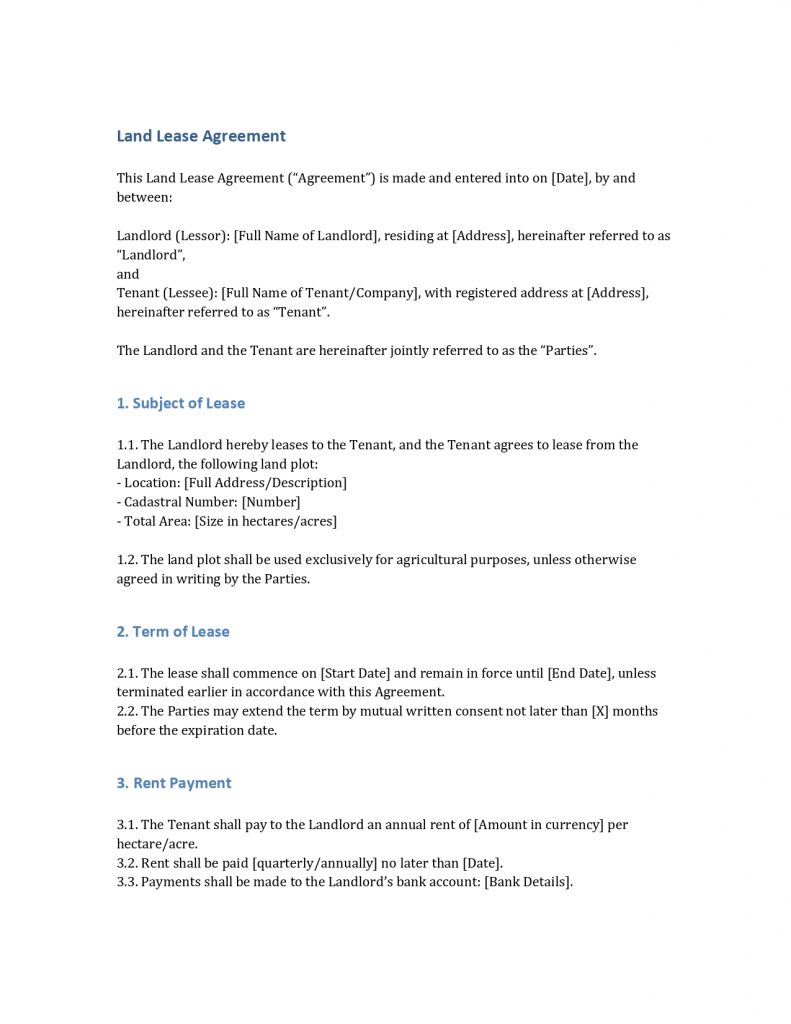
According to the Land Code of Ukraine and the Law “On Land Lease,” a land lease agreement must be executed in writing and subject to state registration.
The document must specify:
- cadastral number and land plot area;
- designated purpose of the land;
- lease term (minimum — 7 years for agricultural land, maximum — 50 years);
- amount and form of rent payment;
- rights and obligations of the parties.
2. Rent Payment: Cash or In-Kind?
For land share owners, the method of receiving rent is often a crucial issue. Payment can be made:
- in cash — the most convenient and transparent option;
- in kind (grain, oilseeds, sugar, etc.);
- in services (e.g., land tillage).
It is important to clearly specify the rent amount and payment deadlines in the agreement. It is also recommended to provide for indexation depending on inflation or market prices for agricultural products.
3. Lease Term
For farmers, long-term agreements (10–15 years) are more advantageous as they provide security of land use and enable investment planning.
For landowners, a long-term lease protects against frequent contract renewals and ensures stable income. However, the agreement should also define conditions for early termination by mutual consent or in case of systematic non-performance of obligations.
4. Agreement Registration
Without state registration in the State Register of Property Rights to Real Estate, the agreement is considered invalid.
Registration can be carried out either by a notary or by a state registrar at an Administrative Services Center.
Farmers should remember: actual land use without a registered agreement poses a risk that the tenant may lose the plot.
5. Rights and Obligations of the Parties
The agreement should balance the interests of both parties.
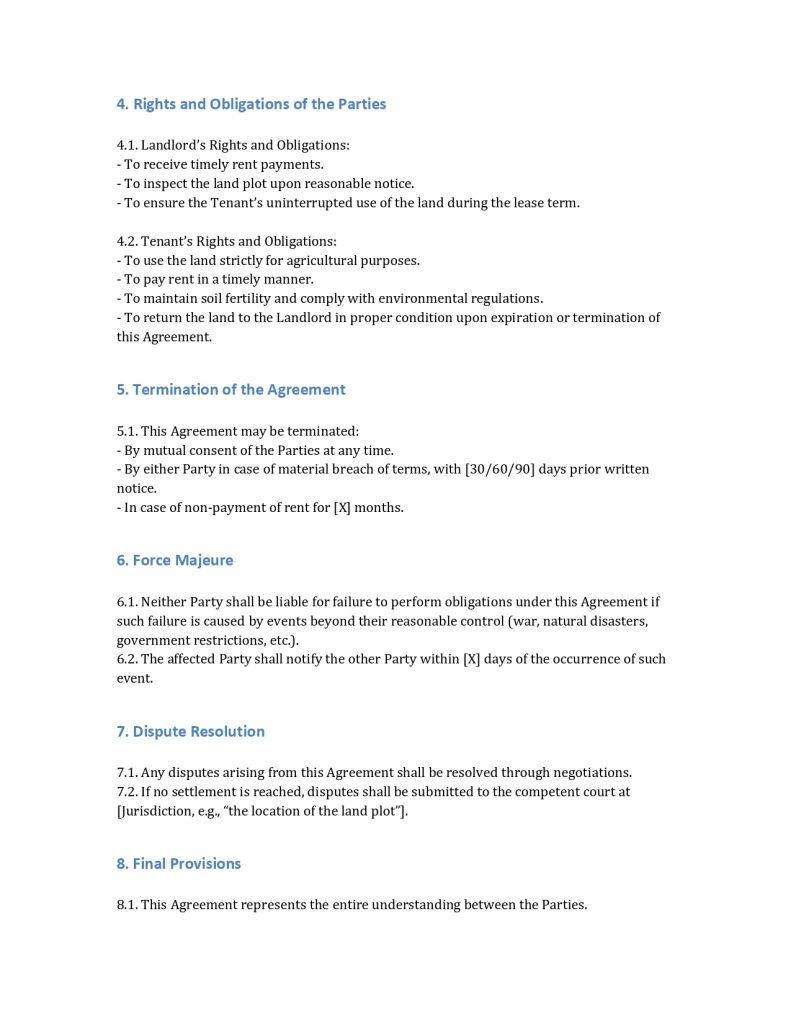
The tenant is obliged to:
- use the land for its designated purpose;
- comply with environmental regulations and crop rotation requirements;
- pay rent on time.
The landlord has the right to:
- monitor the use of the plot;
- demand timely payment;
- initiate contract termination through court in case of violations.
6. Common Mistakes in Lease Agreements
- Missing cadastral number or incorrect cadastral data.
- Reliance solely on oral agreements without written documentation.
- Undefined rent payment deadlines.
- Using template agreements without considering specific conditions.
Conclusion
A properly drafted land lease agreement ensures stability for both agribusiness and landowners. It guarantees transparency in relations, timely payment, and legal protection in case of disputes.
Farmers should pay close attention to legal details, while landowners should keep copies of all documents and monitor compliance with the agreement’s terms.
In case of doubts, it is advisable to consult a lawyer to avoid risks and protect one’s rights.